Shortly after its founding, with no clients or affiliated artists, the gallery made its debut at the London international art fair "COLLECT 2008" with a booth of only 8 square meters, selling out all of its works. The Victoria and Albert Museum (V&A) purchased three pieces. Since 2013, it has repeatedly exhibited at TEFAF Maastricht, one of the world's leading art fairs, and currently introduces Japanese artists to top museums and collectors worldwide, including the Metropolitan Museum of Art (The Met), the V&A, and the Ryukyu Museum, in addition to art fairs such as Art Basel HK and Frieze Seoul. The gallery "A Lighthouse called Kanata" in Aoyama is not yet widely known in the Japanese art scene, but it is an art gallery with a solid track record overseas.
The driving force behind their work is selecting outstanding Japanese artists and their works with their own discerning eye, and accurately conveying their appeal to the world through high-quality English writing and exhibitions. They enjoy the deep trust of artists such as sculptor Kan Yasuda. The Premium Japan Award was established to highlight the achievements of this gallery, which has connected Japanese beauty to global recognition, and of its leader, Kazuhei Aoyama, and to present the first ever award.
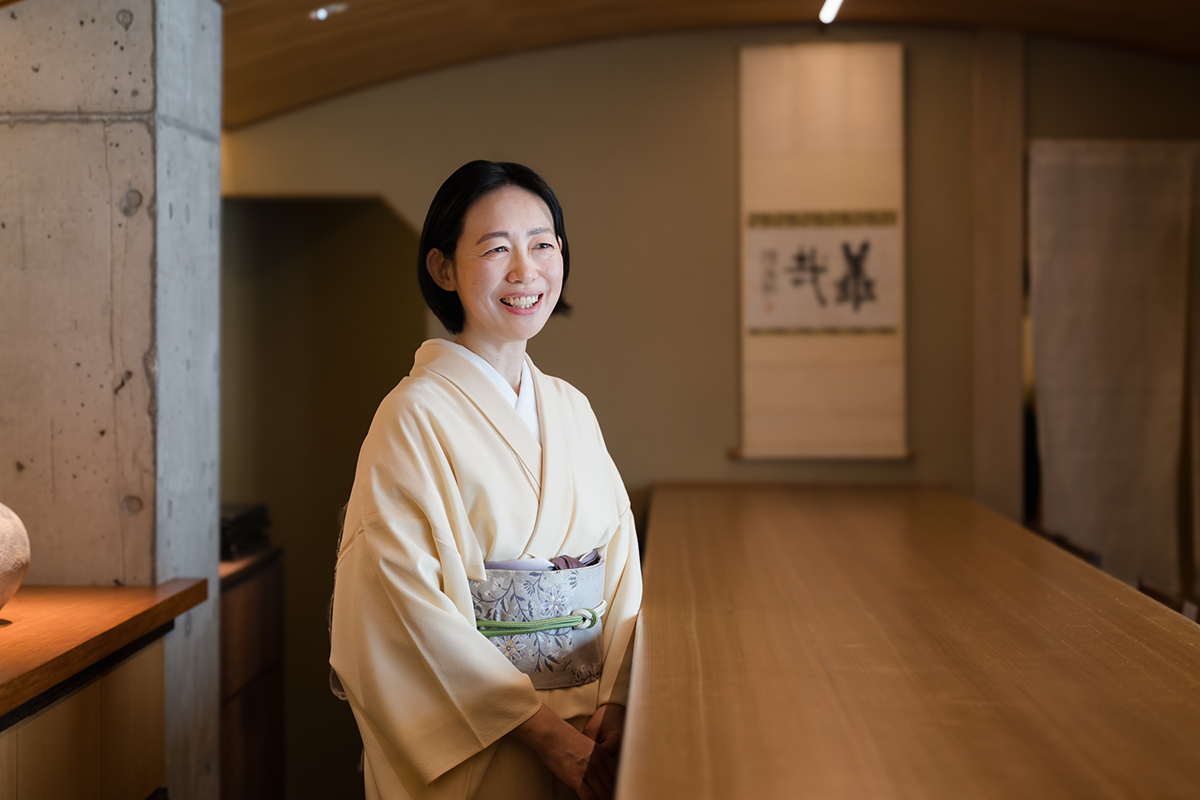
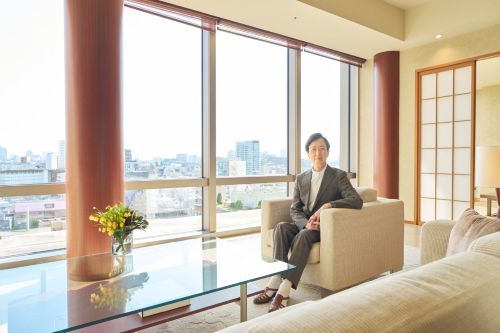
I spoke with Kazuhei Aoyama at his gallery in Omotesando, which had just relocated in 2025.
A "lighthouse" that museums around the world visit.
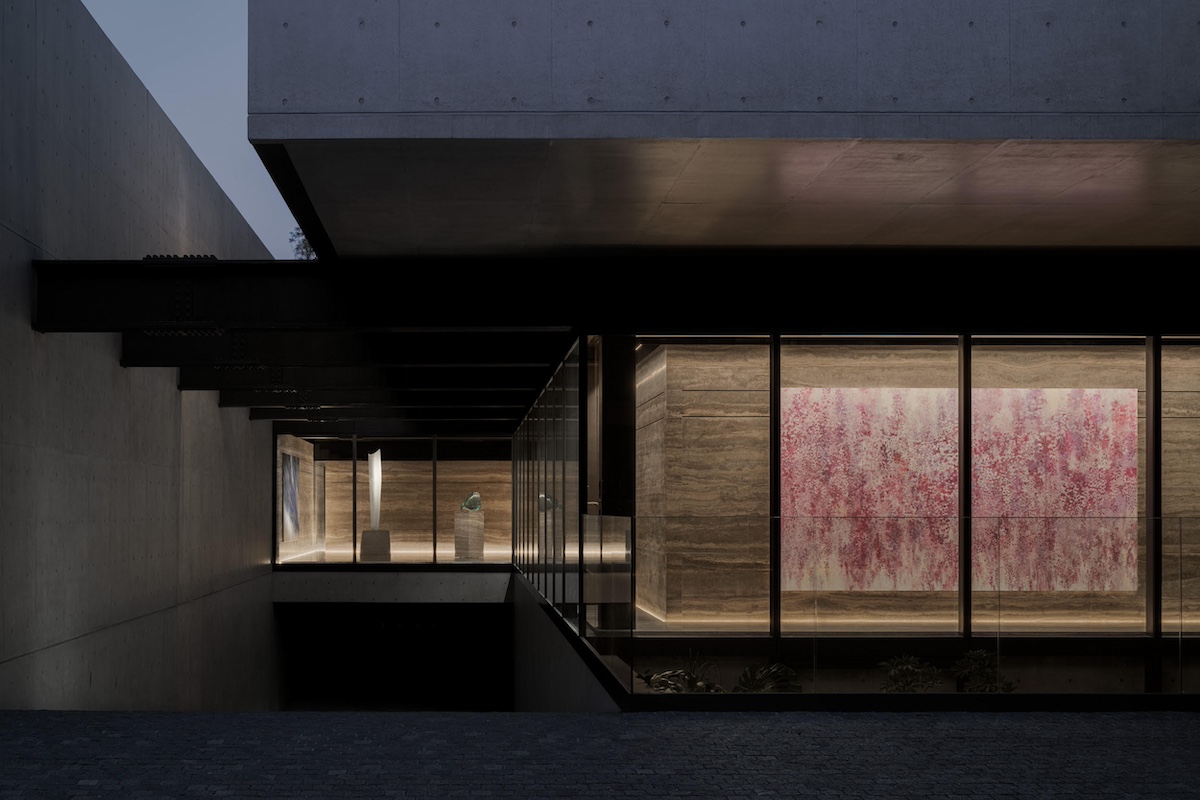
Located on a quiet street near Omotesando, A Lighthouse called Kanata aims to brighten the future of the Japanese art scene by discovering outstanding Japanese works and conveying their appeal to top museums and collectors around the world. Image provided by: A Lighthouse called Kanata
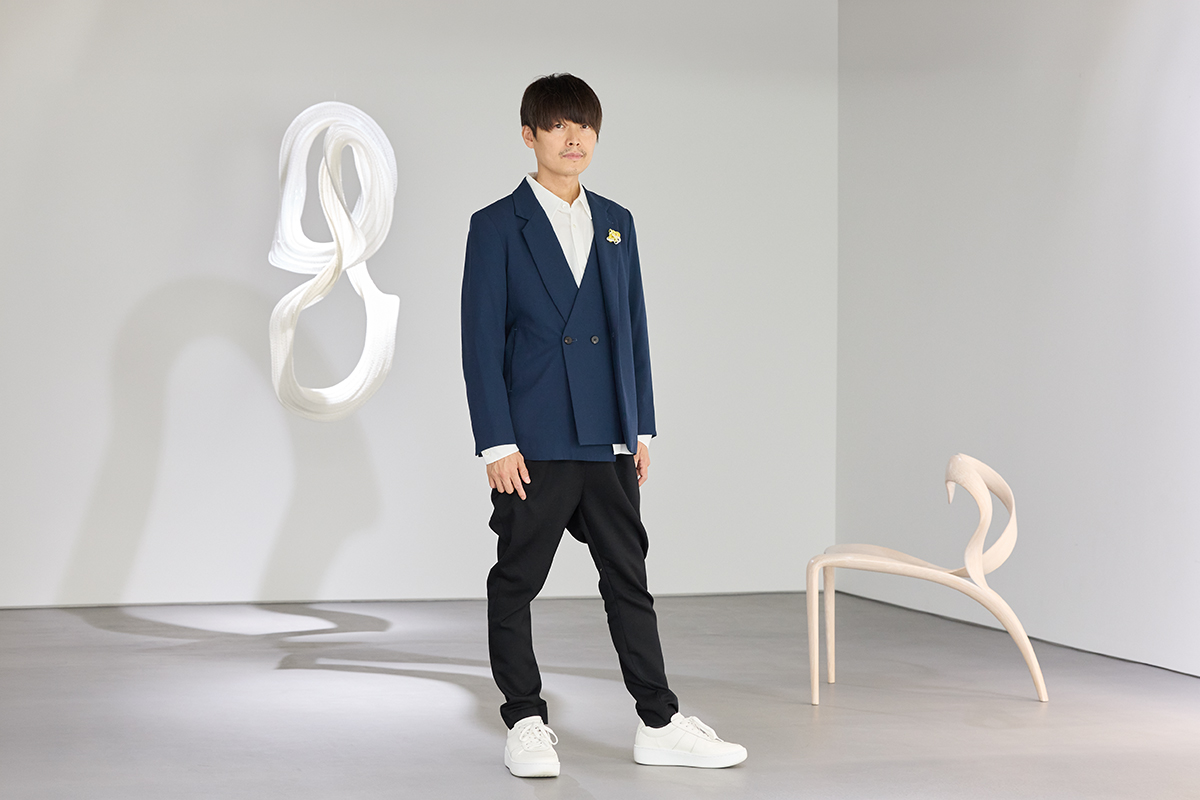
Kazuhei Aoyama, head of the gallerist "A Lighthouse called Kanata," has an unconventional background. Having received his education in the United States and the United Kingdom, he has used his keen aesthetic sense and fluent English skills to introduce Japanese art works that have yet to receive recognition to the world, and has now earned the deep trust of famous museums and top brands overseas.
In Omotesando, Tokyo, just off Maizumi Street, stands A Lighthouse called Kanata's new base, consisting of three floors above ground and a rooftop terrace. The three-floor structure boasts a spacious floor area of approximately 720 square meters.
"I believe that truly excellent things are those that transcend language, religion, borders, and race, and immediately touch people's hearts. I created this gallery as a way to evoke that feeling," Aoyama says.
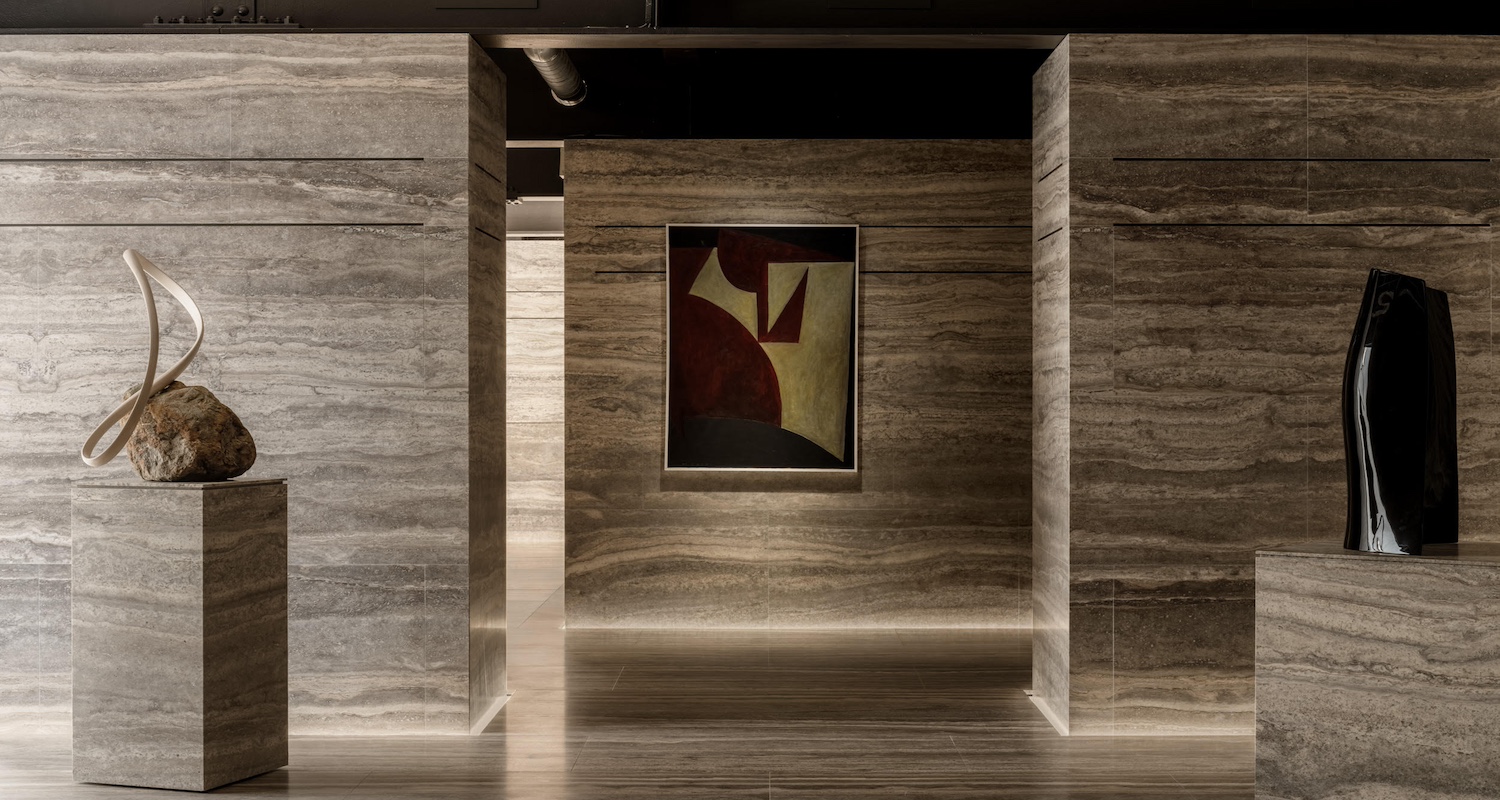
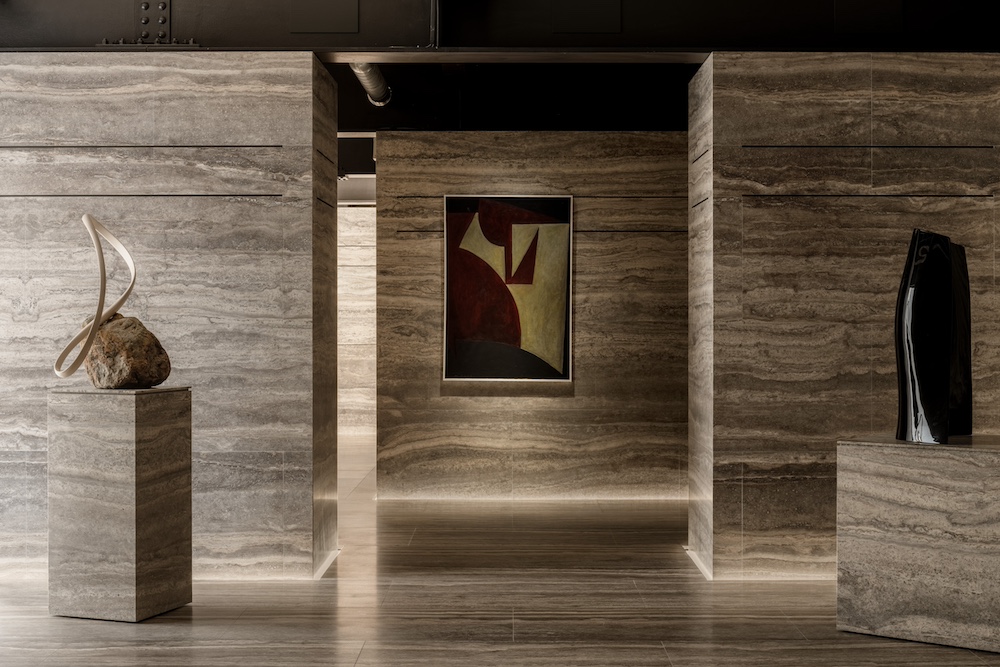
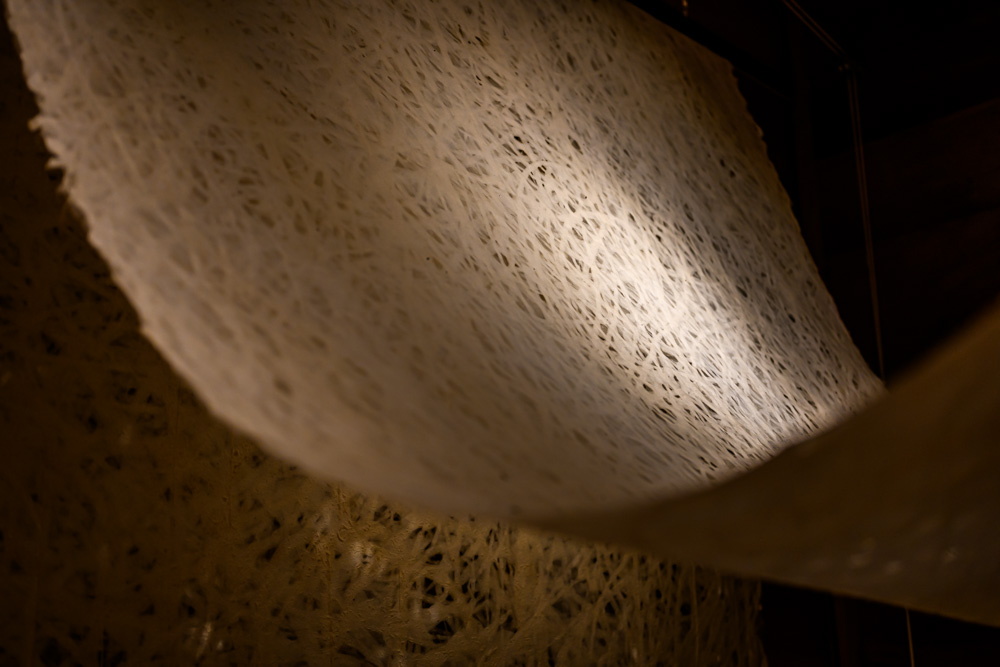
Upon entering the building, the gallery doesn't appear immediately. Beyond the entrance lies a long corridor reminiscent of the crawl-through entrance of a tea room, and the gallery finally comes into view through a door at the end of the corridor. It's not a typical white cube gallery; the walls are made of heavy limestone. The sheer grandeur is overwhelming. The travertine used is from Italy. Light touches the fine irregularities, quietly revealing the outlines and shadows of the artworks.
In fact, Aoyama has an unforgettable formative experience related to space. When he was young, he stepped into a cathedral at night and found himself in a space enveloped in silence, with only one artwork illuminated by moonlight.
"I think everyone, regardless of their religious beliefs, was moved by its beauty," he said, adding that he wanted people to feel the same sense of grandeur in this gallery.
On the second floor, in addition to the invitation-only second gallery, there are private viewing rooms and a bar for VIPs. As guests sit on sofas and enjoy wine brought from the cellar, a sliding door opens in front of them, revealing a single recommended artwork. Once the guests have finished their encounter with the artwork, the door closes again, and then opens once more as the next artwork appears. This small ritual, designed for a one-on-one encounter between artwork and person, is a device that brings smiles to the faces of the world's top buyers and collectors who appreciate quality, and it suggests that Aoyama truly works with the world's top elite.
In the gallery, Aoyama imagines the viewer's perspective and adjusts everything from the height of the display stands to the spacing between works, the intensity of light, and even the color temperature. For Aoyama, exhibiting artwork is not the final stage of arranging completed pieces, but a creative act of bringing out the maximum power that each piece possesses.
Nowadays, museums from around the world organize tours specifically to visit this gallery. Trustees from the Cincinnati Institute of Arts and the Museum of Fine Arts, Houston, have visited, and the Metropolitan Museum of Art has hosted a banquet with a chef from a long-established restaurant in Kanazawa. It is also said that the gallery hosts private events for top fashion brands from around the world.
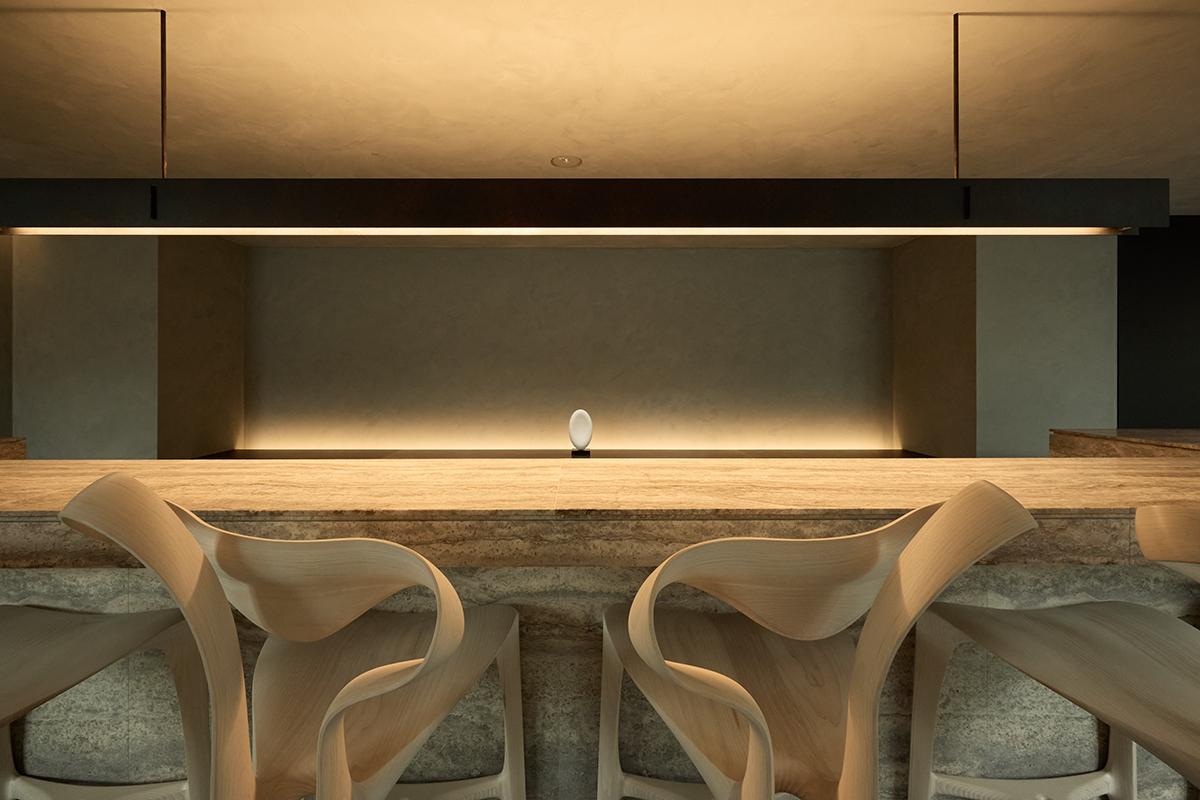
The bar counter in the VIP room. A sculpture by Kana Yasuda, "Tenpi," sits at the front, while elegant wooden chairs by Irish artist Joseph Walsh line the counter. It embodies Kanata's aesthetic, where artwork, furniture, and hospitality are seamlessly integrated.
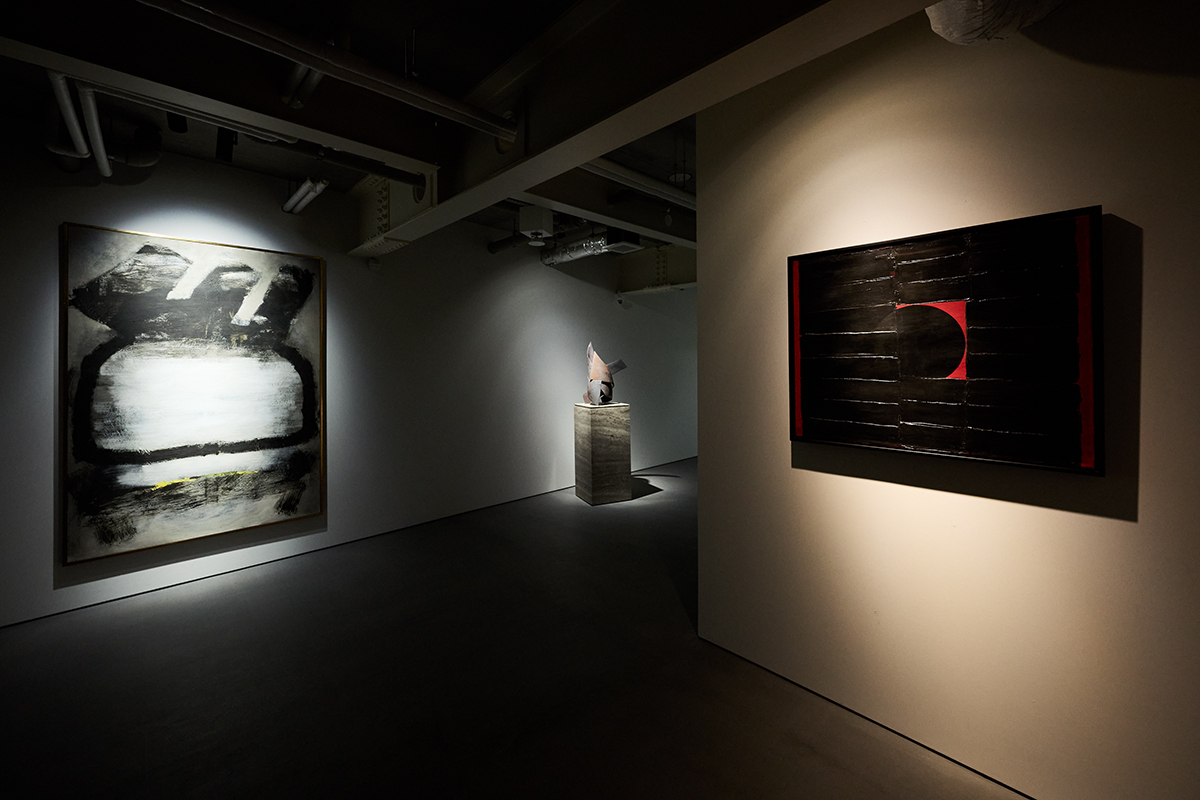
On the second floor, separate from the ongoing solo exhibition, there is a second gallery available by reservation only, featuring works by the gallery's main artists.
Zero customers, zero artists. From 8 square meters to the V&A.
Aoyama was born in Tokyo in 1979. He spent his first nine years abroad, but was deeply impacted by a Turner exhibition he saw at the Yokohama Museum of Art during his high school years. While attending university in New York, he was overwhelmed by Jackson Pollock's "Autumn Rhythm: Number 30, 1950." He says that at every turning point in his life, he has encountered works of art that have changed the direction he is heading.
However, she chose law, not art, as her major in college. After graduating from New York University, she went on to graduate school at Oxford University. She studied law not because she wanted to become a lawyer, but because she was interested in "how to think legally." In fact, she had also considered becoming a novelist or a politician.
The turning point came when I received a call from my father, with whom I had been estranged for a long time. My father ran a small shop in Minami-Aoyama called Yufuku Gallery, which dealt in ceramics and tableware. After graduating from graduate school, I was invited to spend a year learning about ceramics at a sister company in Mishima City, Shizuoka Prefecture, while also trying my hand at writing novels.
"When I actually went there, I couldn't write anything at all. I just couldn't get my words flowing. But strangely, I was drawn into the world of pottery and ceramics, and I thought it was a wonderful world."
There was a gap between my father's business methods and my own ideas. After my apprenticeship, I initially worked for a foreign company, traveling all over the world. There, I met my wife, and we became independent after getting married. Rather than following instructions as an employee, I chose the path of creating the values I believed in.
In fact, through his time living abroad and visiting art museums in Europe and America, Aoyama had begun to harbor some serious doubts.
"Why is such a rich Japanese art and culture so little known to the world? Around the year 2000, even Hiroshi Sugimoto and Yayoi Kusama weren't as widely introduced as they are today."
Aoyama was certain of it.
"Objectively speaking, Japanese art and culture are second to none in the world. There are many things that are not inferior at all, and in fact, I think they might even be superior. Yet, they weren't being introduced to the world. So I thought about what kind of work I could do that only I could do."
In 2007, I founded Toku Art using wedding gifts as capital. I even handled the registration myself. I had no connections, no funds, no clients, and no artists. But I was determined to do one thing: "to introduce Japanese art and culture to the world."
Soon after, I found information online about "COLLECT," an international art fair to be held at the Victoria and Albert Museum (V&A) in the UK. "This is it," I thought. At this point, I didn't have my own gallery yet, so I borrowed the "Torifuku" sign from my father and borrowed the exhibition fees from people around me. At the time, one pound was about 260 yen. I brought six selected artists into an 8-square-meter booth.
"We didn't have any affiliated artists or clients yet, but I took the plunge. I had the confidence that we might actually succeed."
He believed that even works not yet known in Japan might be appreciated by people around the world without preconceived notions. That was the idea behind his challenge.
The result was a complete sell-out. The V&A purchased works by Ken Mihara, Naoki Takeyama, and Shigekazu Nagae, and world-renowned collectors became clients. Aoyama laughs, saying, "I was really lucky," but the fact that he didn't let his good fortune end as a one-time event is perhaps the true essence of this gallery.
It wasn't all smooth sailing at first; there were times when they had very few customers and barely any sales, but Aoyama recalls that by persevering, they gradually gained strength.
"My primary focus was on my vision of what I wanted to do and what I wanted to leave behind for the world. Profit followed naturally afterward."
Following his father's retirement, Toku and Torifuku merged in 2011. In 2020, the company was renamed "A Lighthouse called Kanata." "Kanata" refers to the far-off, other side. "Lighthouse" is the English word for "lighthouse," but it also incorporates two Japanese phrases: "It's dark under the lighthouse" and "to illuminate one's corner."
"Japanese people don't notice the art and culture that's right in front of them. Jakuchu, Ukiyo-e, and Gutai art—they were appreciated overseas before they gained recognition in Japan. So I thought, why not let the world's top artists get to know about them first, and then bring them back to Japan?"
By sending light far and wide, the Japanese people themselves rediscover the beauty of Japan that lies beneath their feet. The slightly eccentric and lengthy name directly reflects Aoyama's strategy and romanticism.
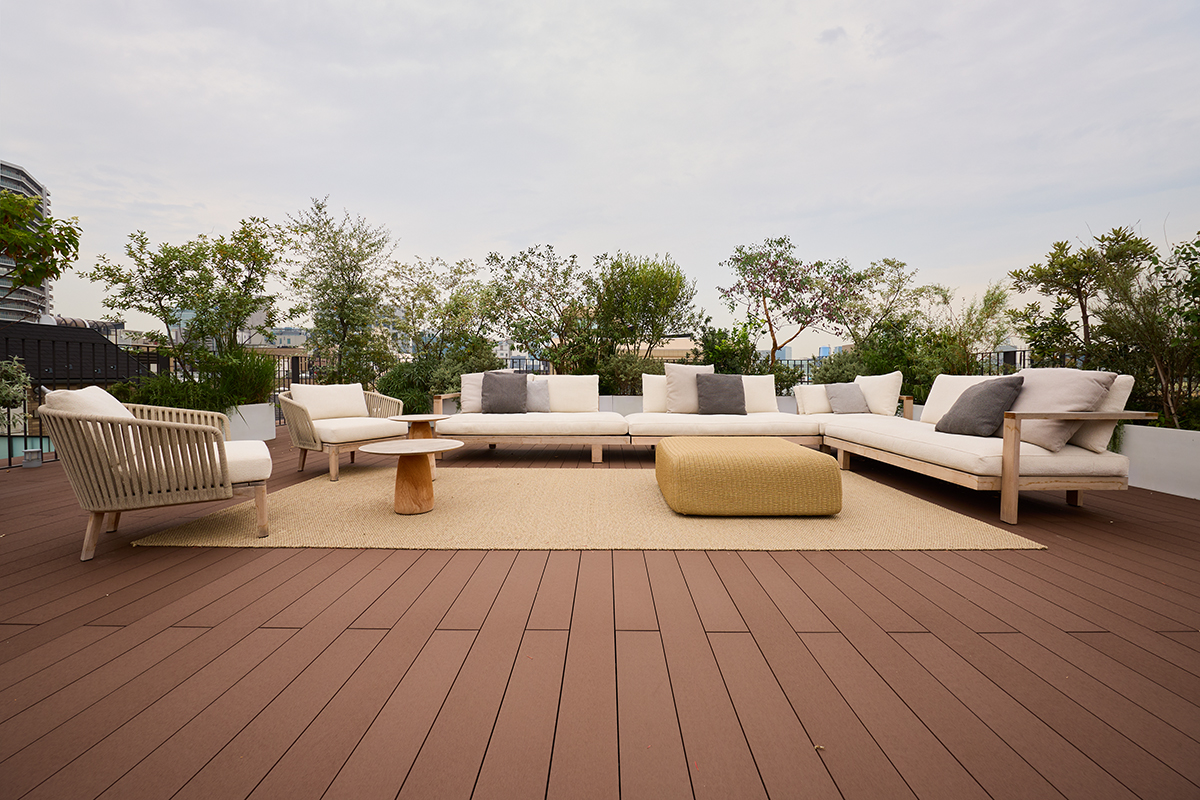
A Lighthouse called Kanata is frequently used for private events by VIPs. In fact, it also has a rooftop terrace furnished with beautiful furniture.
Making "materials, technology, and beauty" a language for the world.
Kanata handles works made from a variety of materials, including ceramics, glass, metal, lacquer, bamboo, and wood, in addition to paintings and sculptures. Many of the artists use materials typically associated with "crafts." They deliberately do not separate crafts and fine arts based on their purpose or technique. They present expressions that transform space through materials and techniques as contemporary art.
Aoyama's criteria for selecting works are clear.
"We don't chase fleeting trends. What can we leave behind for Japan 100 or 200 years from now? Our criteria for selecting works haven't changed since the very first fair."
Aoyama says that there are three elements to a great work of art. First, the artist's deep understanding of and love for the material, in other words, materiality. Second, the artist's exceptional skill and craftsmanship, which is unique to that person. And third, the beauty, the obsession with beauty, that elevates the material and technique into an expression that no one has ever seen before.
"I believe that truly great works of art, universal beauty, and masterpieces, possess three elements. This principle remains the same whether it's from ancient Egypt thousands of years ago, the Roman Empire, or the Renaissance era under Raphael."
Aoyama emphasizes the importance of whether his work resonates with people across different eras and cultures. "Can it touch people's hearts at first sight? That's fundamentally very important. For example, would someone in the Roman Empire 2000 years ago understand its technique and beauty?"
On the other hand, Kanata stands apart from the current trend where concepts take precedence while materials, techniques, and aesthetics are neglected. Aoyama believes that the ideas embedded in a work should be expressed through the choice of materials, techniques, and visible forms. In an era where the act of creating by hand is often undervalued, Kanata is trying to bring the connection between materials, techniques, and aesthetics back to the center of contemporary art. He is promoting this aesthetic as "Keisho-ha (School of Form)" or "New Materialism."
When it comes to communicating the artistic value of art, Aoyama emphasizes the "power of words" above all else. Since his first appearance at an overseas art fair, he has produced the catalog himself and written the descriptions of the works and artists.
"I write the explanations in both Japanese and English from my own perspective, rather than leaving it to AI. I also write the explanations when museums purchase artworks. I didn't do it because someone taught me; I did it by thinking about what would satisfy me if I were the customer."
The writing goes beyond simply explaining the background of the artwork. It explores why those materials were chosen, how traditional techniques are updated, and what kind of space they create. The aim is to connect what the artist has created to the context of world art history and collections. In short, it's not a sales pitch, but rather writing to give Japanese aesthetics an international place.
The glass sculptures of Taniko Ikuta are a prime example of this achievement. She is an artist who creates spiral forms that contain light and movement by cutting, gluing, and layering sheets of glass. In 2010, the V&A acquired her work, and her 2019 piece, "Ku-131 (Free Essence-131)," is now part of the Metropolitan Museum of Art's collection. While her work was considered "craft" in Japan, Aoyama's powerful words have led to its acceptance as contemporary sculpture in galleries overseas.
"We don't leave it up to the artists. We work hand-in-hand with them to bring out their best qualities. Together, we create worldviews and works that have never been seen before. We don't just give advice; we also provide financial support. That's something we've always valued."
They purchase the artwork, provide funding for its creation, frankly communicate its strengths and weaknesses, and even organize the exhibition.
The model for this approach is said to be Paul Durand-Ruel, the art dealer who supported the Impressionists. He is known for buying and supporting the works of Monet and Renoir, who were not yet well-known, and creating an environment that allowed them to continue creating art.
He treats writers frankly, regardless of whether they are older or younger than him. He also treats collectors the same way. He doesn't make unfounded promises about how much a piece's value will increase in a few years.
"I don't flatter, I don't fawn, and most importantly, I don't lie. The most important thing is not to lie. I'll be honest about what I can and can't do. I think the worst thing I can do is to say that a young writer's work is 'good' when it's not good."
The key is to base discussions on the essence of the work itself. This is likely what has earned them the trust of both the artist and the client.
On the other hand, he is surprisingly flexible when it comes to requests other than artwork. He has even personally hand-carried artwork by plane for overseas clients, and he has arranged itineraries that include not only hotels and restaurants, but also flower arrangement workshops, tea ceremonies, and tours of cultural properties that are usually not open to the public.
"I see Gallerist as more than just a retail business; I see it as a service industry. That's why, no matter what request we receive, I don't consider it unreasonable. I proactively take on these requests, thinking, 'This is something only we can do.'"

A private viewing room for special clients is set up on the second floor. On the back wall hangs "Waterfall" (2024) by Tatsunosuke Muramatsu, a young artist whom Aoyama has taken notice of, and on the table is "Legato XIV" (2023) by Kosuke Kato. The black section on the right has a sliding door, and when a collector visits, only one artwork is displayed behind this door. The cellar always has more than 100 bottles of wine, including the house champagne, Henri Giraud.
Sending light to the world, and bringing it back to Japan.
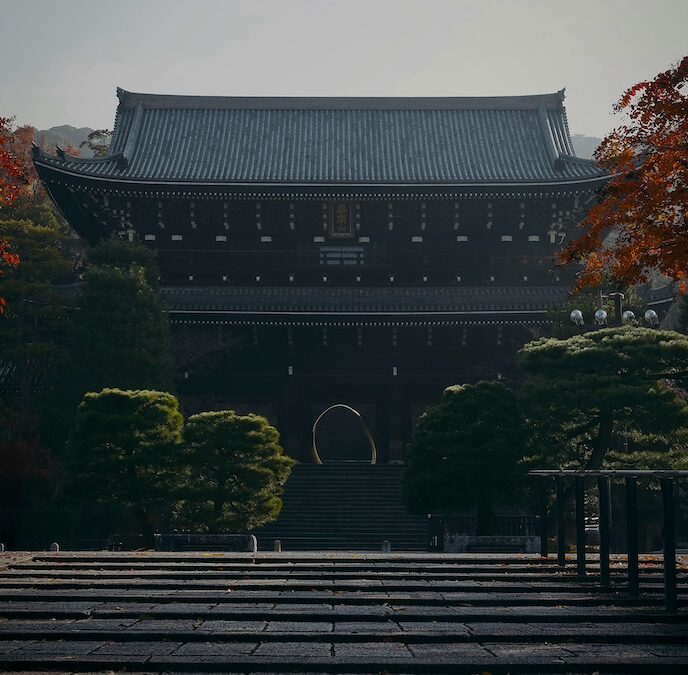
Joseph Walsh's work "Magnus RINN," which was displayed in front of the Ireland Pavilion at the Osaka-Kansai Expo, was later exhibited at Chion-in Temple in Kyoto and received great acclaim.
Image courtesy of Ito Makoto, Joseph Walsh Studio
In front of the Irish Pavilion at the 2025 Osaka-Kansai World Expo, a golden ring approximately 6 meters tall, known as "Magnus RINN," was installed. It is the first large-scale outdoor sculpture by Joseph Walsh, a leading Irish artist. The lower half is made of bronze bearing the traces of human hands, the upper part is made of wood, and the entire structure is covered in gold leaf. It is a work that symbolizes humanity, nature, and the cycle of time.
Kanata had long introduced Walsh to the Irish community, and through this work, she built relationships with the Irish Embassy and the Irish Ministry of Foreign Affairs. At the Irish Pavilion at the World Expo, the international trust that Walsh and Aoyama had cultivated culminated in a work that represented the country. After the Expo, "Magnus RINN" was moved to Chion-in Temple in Kyoto, creating a new landscape that connects Ireland and Japan, and modern sculpture and temples.
This project is a prime example of how Kanata's work extends beyond the buying and selling of artworks. It connects artists, government agencies, embassies, landscape architects, and historical sites, creating a space where their respective cultures can engage in dialogue. It is a two-way cultural activity that not only introduces Japanese art to the world but also welcomes outstanding international artists into the Japanese context.
While welcoming outstanding artists from overseas to Japan, the very foundation of Kanata's activities lies in sending art that has not yet been fully appreciated in Japan to the world, and then bringing the recognition it receives back to Japan.
That gaze is directed at a wide range of people, from postwar writers whose work has yet to be properly appreciated to young writers who have just emerged into the world.
Among the postwar writers that Aoyama mentioned was Kumi Sugai. "He has potential beyond concrete art, but at present he is not sufficiently appreciated in Japan or around the world," he said.
On the other hand, when asked about the next generation, Aoyama mentioned Tatsunosuke Muramatsu, who painted the work "Waterfall Painting" which is displayed on the wall of the VIP private viewing room.
"This isn't a photograph. It's a painting. I think even people from 2000 years ago would understand how amazing this technique is. This is a work he created when he was 24 years old."
This artwork, painted in oil on an aluminum surface over two meters wide, depicts a waterfall. The silver surface, which changes its appearance depending on the light, features intricately rendered flowing water, creating a powerful image that could easily be mistaken for a photograph.
This piece can be said to encapsulate the "materials, technique, and beauty" that Aoyama uses as his criteria for selecting works.
In this way, Aoyama discerns the power of the artwork itself, rather than its fame or background, through his own aesthetic sense. And he conveys that value with clear and unambiguous language, whether in Japanese or English. It's not difficult to talk about ideals with words alone. However, the beauty of the artwork before you, and the subsequent achievements of the artists Aoyama has introduced to the world, including Ikuta Tanyoko, provide solid backing for his aesthetic sense and discourse.
"Shining a light on these individuals' corners of the world is a core principle of Kanata. We aim to shed light on forgotten and buried talents and convey them to the world as a beacon of hope for the Japanese art world."
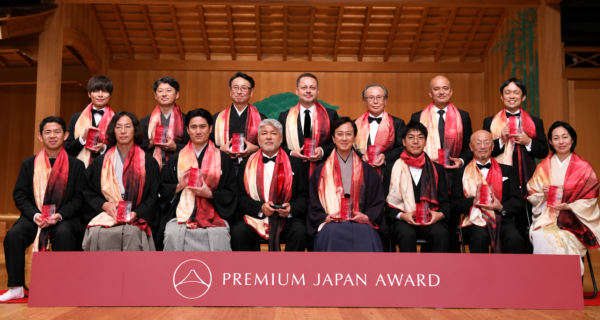
The Premium Japan Award recognizes not only Aoyama's discerning eye, which has captivated museums and collectors worldwide, but also his achievements.
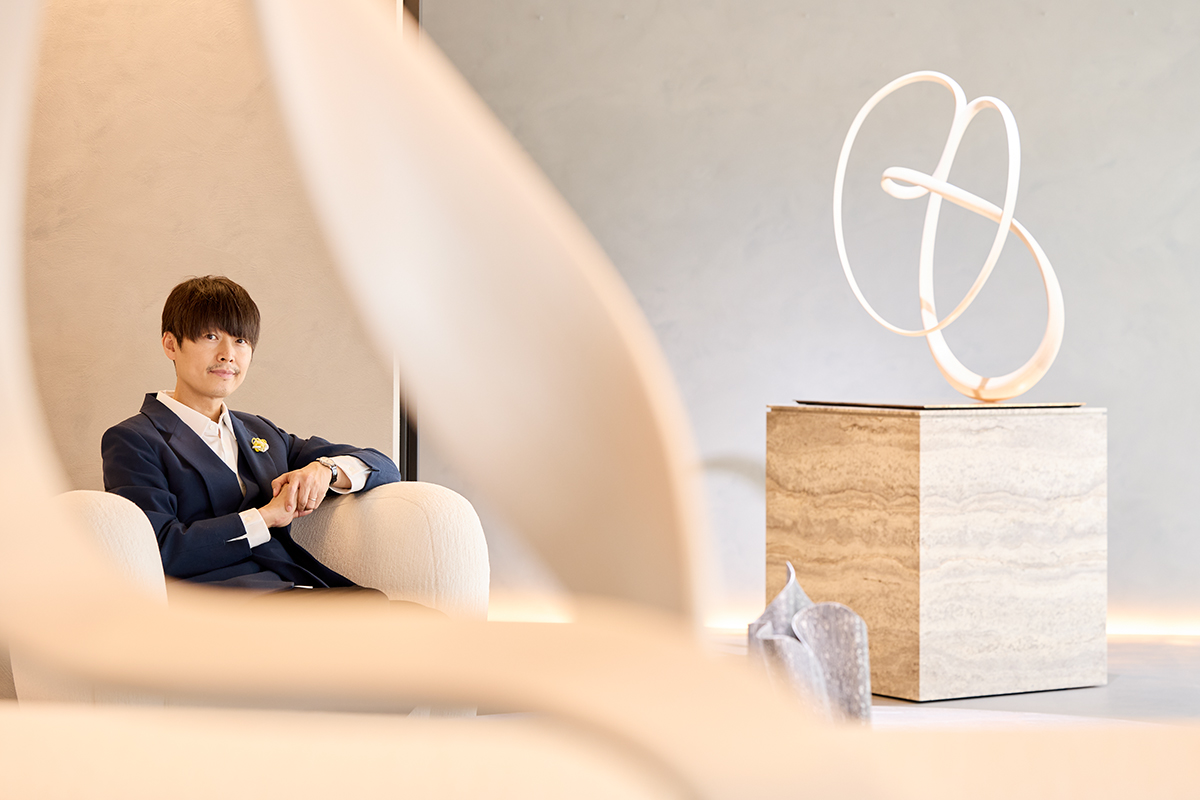
The slightly unusual name of the gallery, "A Lighthouse called Kanata," reflects Kazuhei Aoyama's desire to illuminate the future by focusing on "one corner of the world" rather than simply acknowledging the obvious.
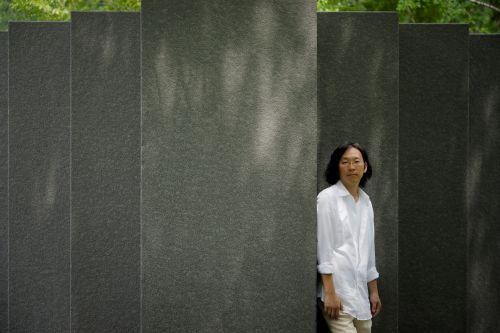
Wahei Aoyama
Born in Tokyo in 1979. Graduated from New York University in 2001 and completed graduate studies at Oxford University in 2003. After working for a foreign-affiliated company, he established Toku in 2007. In 2011, he merged Toku with Torifuku Gallery and became its owner. In 2020, he renamed the gallery A Lighthouse called Kanata. He introduces Japanese contemporary art and aesthetics within an international context and has built relationships with museums, collectors, and art fairs around the world.
Photos by Hidehiro Yamada
JCCO
PREMIUM JAPAN AWARD
PREMIUM JAPAN AWARD 2026




PREMIUM JAPAN AWARD